
Ancient City Bangkok | Complete Guide to Photography & Culture
Updated: October 2025
The Ancient City (Muang Boran) brings together over 116 architectural wonders from across Thailand into one massive outdoor museum just 30 kilometers from Bangkok. Spend an afternoon cycling past golden palaces, Khmer temples, and traditional villages–capturing 700 years of Thai heritage in a single photogenic location.
Tickets: 380 baht on Klook or 700 baht at gate















What Makes This Place Special
Spanning 320 hectares in Samut Prakan province, this outdoor museum recreates Thailand’s architectural heritage at a scale that feels surreal. The layout mirrors the shape of Thailand itself, with each structure positioned according to its actual geographic location.
Many tourists make the mistake of skipping this site, assuming replicas can’t match authentic temples. They miss experiencing structures that no longer exist anywhere else—like the Grand Palace of Ayutthaya, destroyed in 1767—alongside buildings that would take weeks to visit across Thailand.
Most replicas stand at one-third scale, though several temples match their original dimensions exactly. The Sanphet Prasat Palace from Ayutthaya represents one of the most ambitious reconstructions here–the original palace burned in 1767 during the Burmese invasion, leaving only foundations behind.
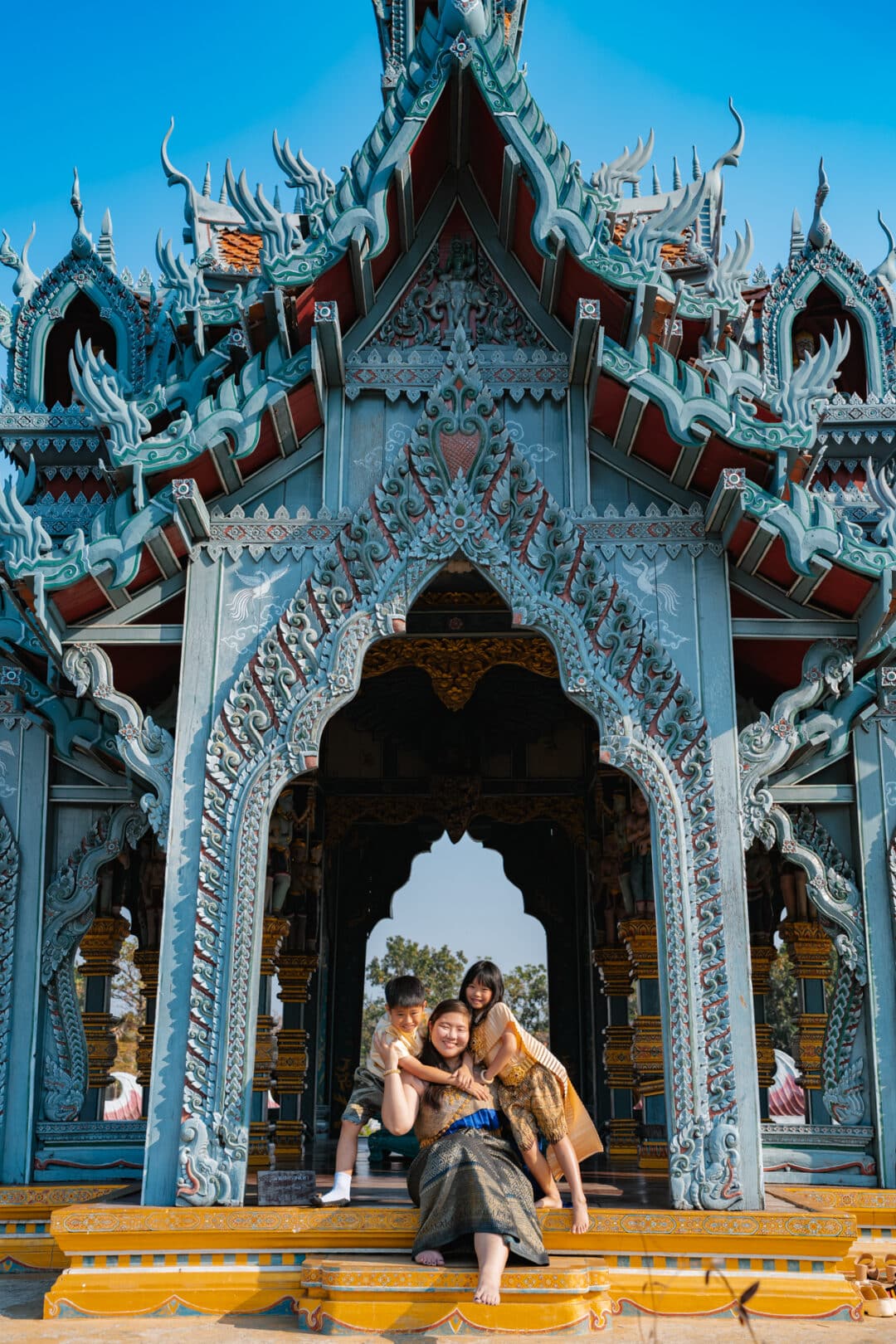
Experts from the National Museum contributed to ensure historical accuracy down to the smallest details. The Pavilion of the Enlightened, an original design found nowhere else, stops visitors with its geometric patterns and multiple viewing levels that seem to defy gravity.
The park functions as both museum and cultural preservation project. Artisans continue traditional building techniques, keeping ancient craftsmanship alive for future generations. Many structures saved here would have disappeared completely without intervention.
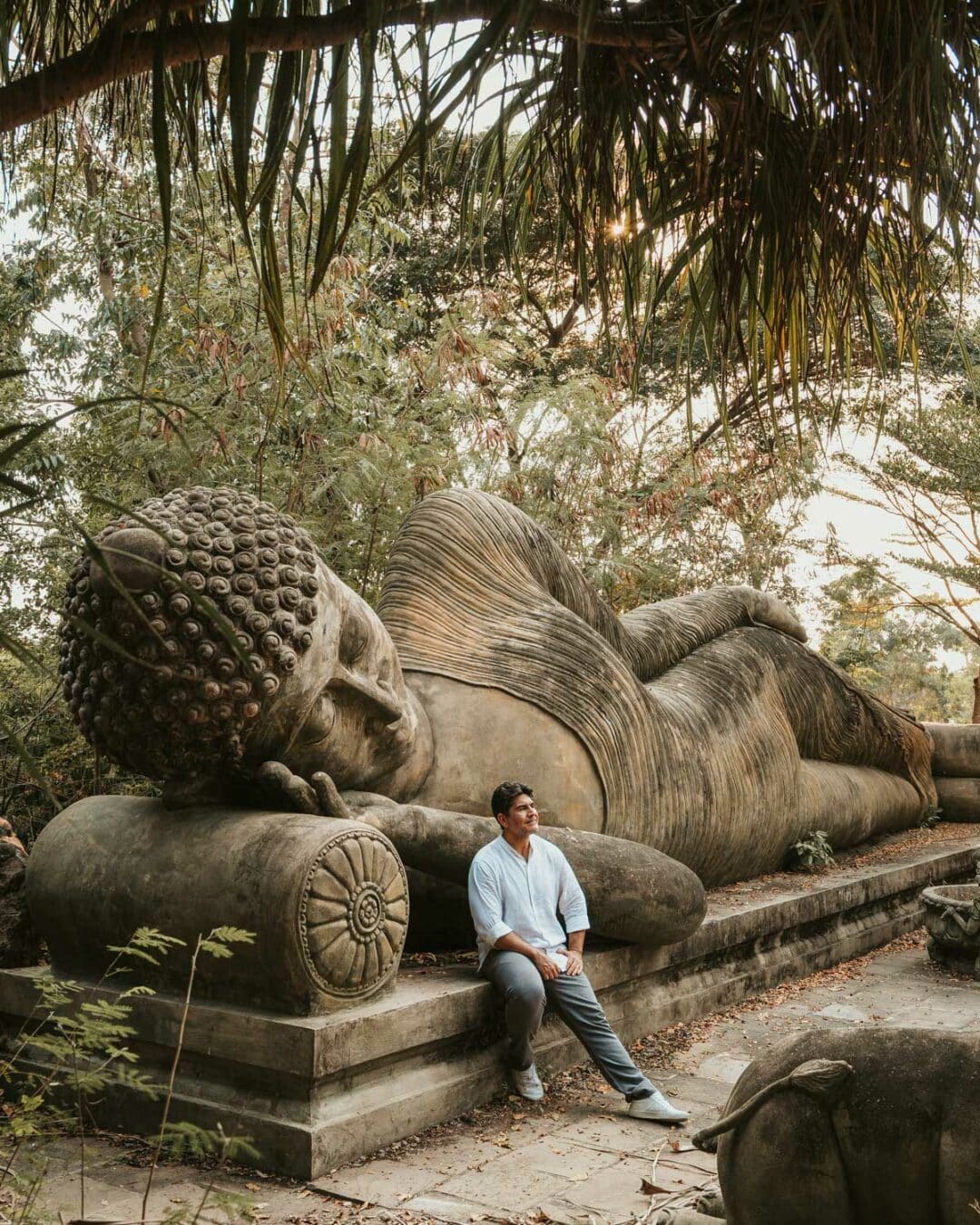
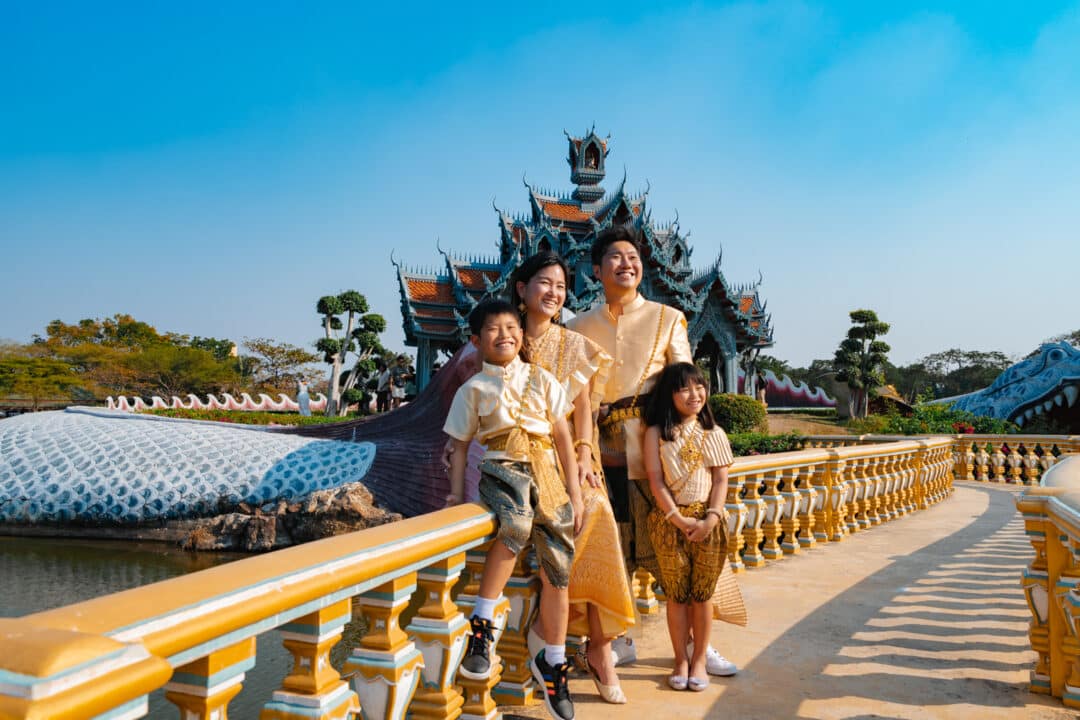
You can explore representations from five distinct regions: North, Northeast, Central, East, and South. Each area showcases unique architectural styles, from Lanna wooden temples to Khmer stone sanctuaries that transport you to Angkor. The romantic temple settings and palace gardens make this a popular choice for marriage proposals and special celebrations, as well as family photography sessions.
History of Muang Boran
Lek Viriyaphant, a successful businessman, founded this park in the 1960s after his passion for Thai culture grew beyond collecting antiques. His original plan called for a golf course decorated with miniature monuments.
Research revealed the poor condition of many historical sites across Thailand. This discovery shifted his vision entirely. Instead of entertainment, he committed to education and preservation.
Construction began in 1963, with the park opening to visitors on February 11, 1972. Viriyaphant and his team spent over a decade traveling Thailand, documenting structures through sketches, notes, and photographs.
The founder collaborated with scholars, archaeologists, and craftsmen to achieve authentic reproductions. Some projects took years to complete. The Royal Sanphet Prasat Throne Hall required extensive research since limited evidence existed about its appearance.
King Rama IX selected this reconstructed palace to welcome Queen Elizabeth II during her 1972 visit to Thailand. This royal endorsement confirmed the project’s cultural significance.
Viriyaphant continued expanding the museum until his death in 2000. He also established the Erawan Museum and Sanctuary of Truth in Pattaya, demonstrating his lifelong dedication to Thai heritage.
Today, skilled artisans maintain the structures and continue new projects. The park evolved from tourist attraction to genuine museum housing authentic artifacts alongside replicas. Temperature-controlled buildings protect valuable pieces from the elements.
Recent additions include structures representing religious concepts and Thai literature. The park balances historical accuracy with creative interpretation, offering visitors both education and inspiration.

Best Photography Spots
The park offers exceptional photography opportunities throughout its 320 hectares. Here are the locations that produce the most striking images.
Sumeru Mountain
This dramatic structure rises from a lake, with a massive fish sculpture circling the base–one of the most photographed spots in the entire park. Afternoon light creates the best conditions for capturing the golden tones of the temple against blue water. Walk around the entire perimeter to find different angles.
The east side provides clean reflections during calm weather. Climb to elevated viewing points on the west for overhead perspectives that reveal the full fish design curling around the mountain.
Pavilion of the Enlightened
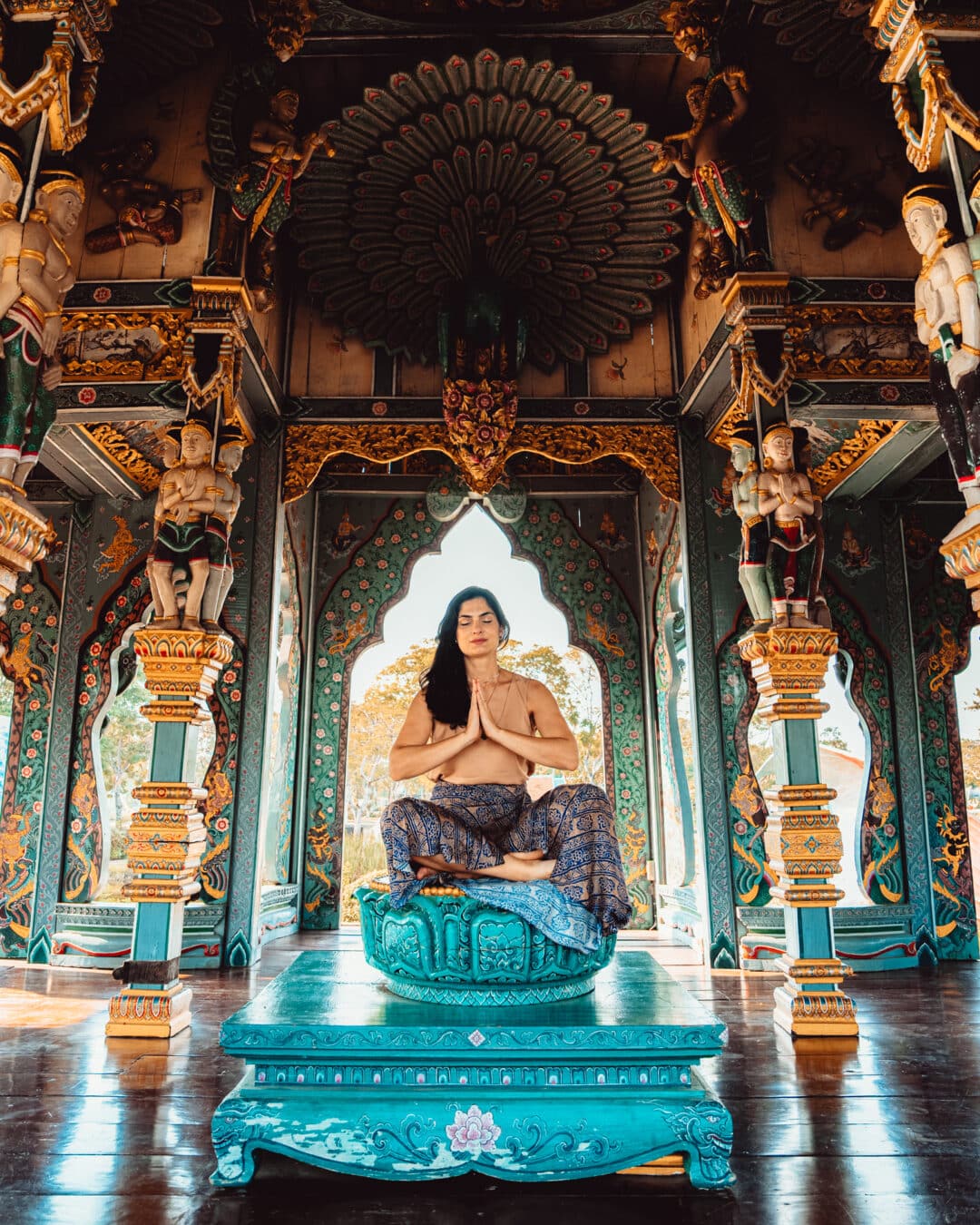
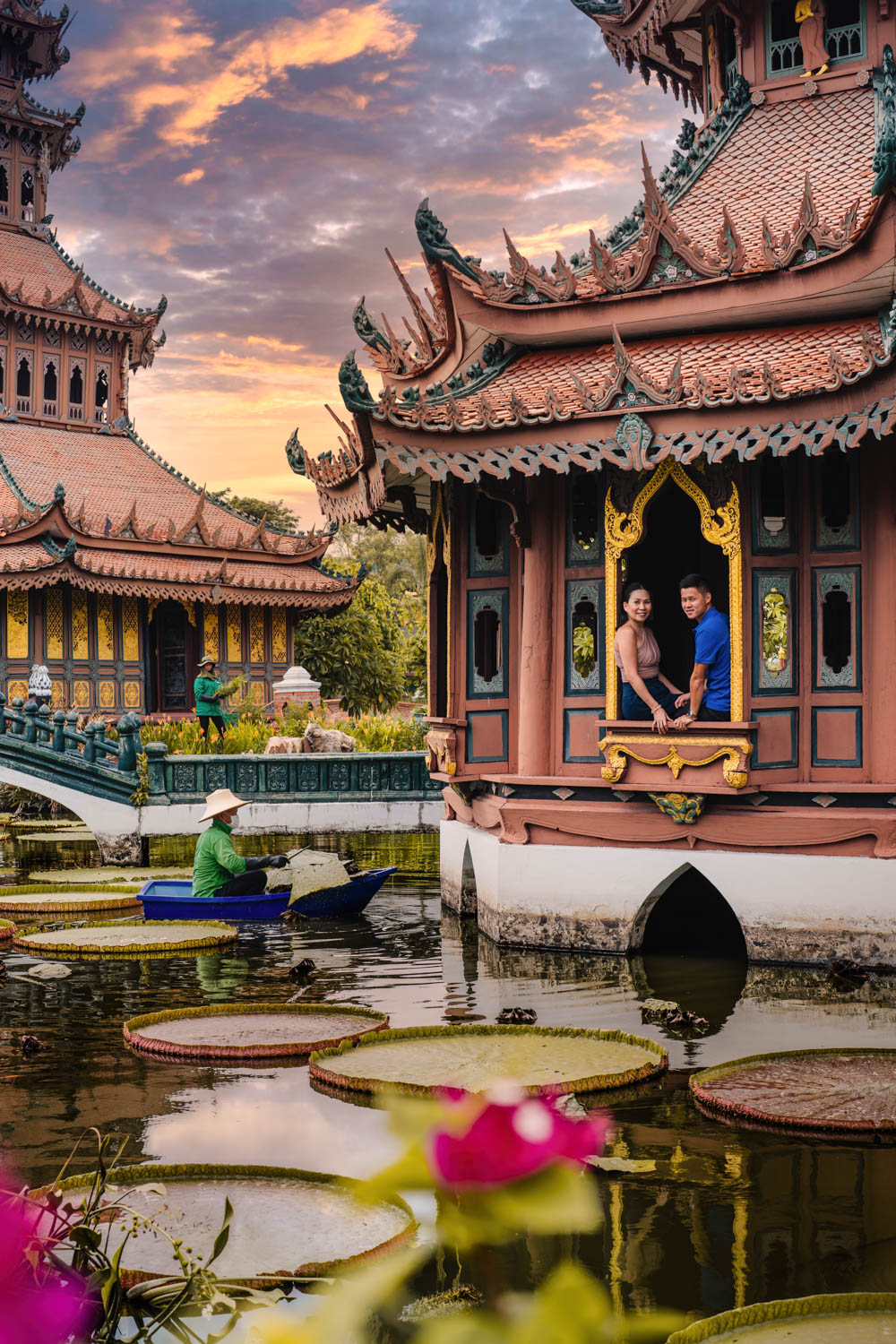
The maze-like walkways and geometric patterns create endless composition possibilities that photographers dream about. Upper levels offer views across neighboring structures. Late afternoon sun illuminates the detailed carvings and colorful decorations in ways that shift every 15 minutes.
The central chamber features intricate ceiling work that demands photography. Bring a wide-angle lens to capture the full architectural complexity without missing the details that make this structure unique.
Sala of Ramayana
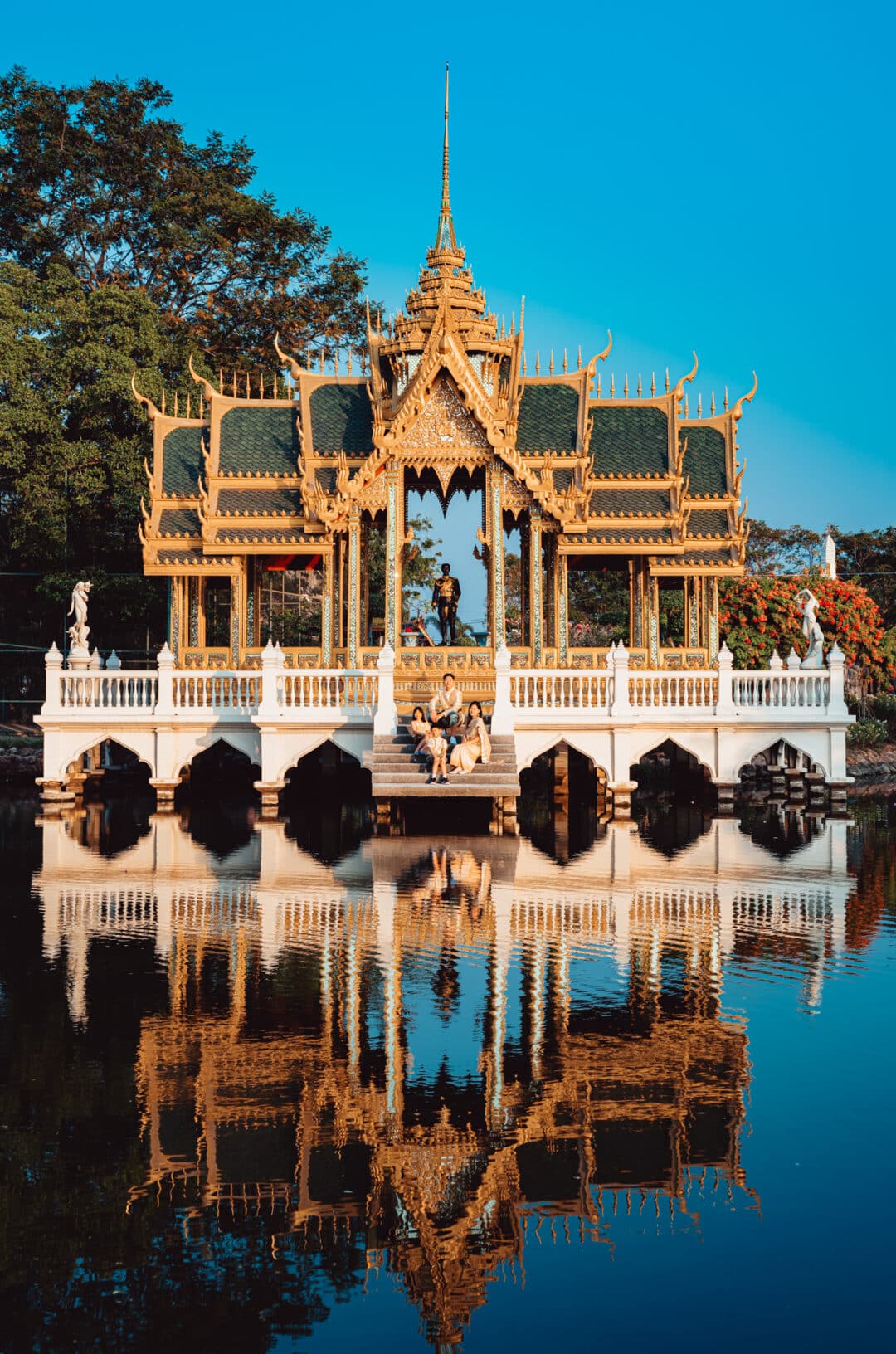
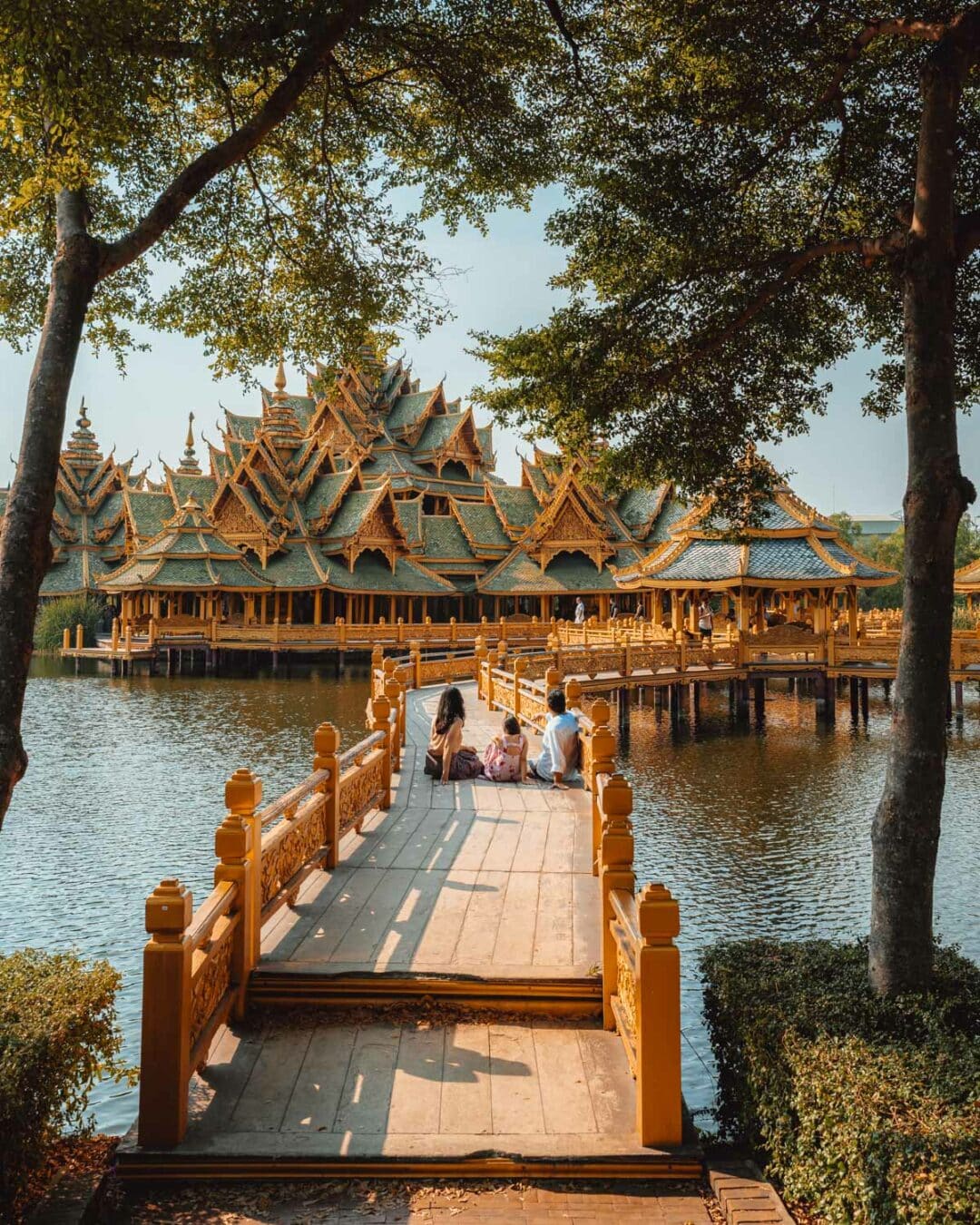
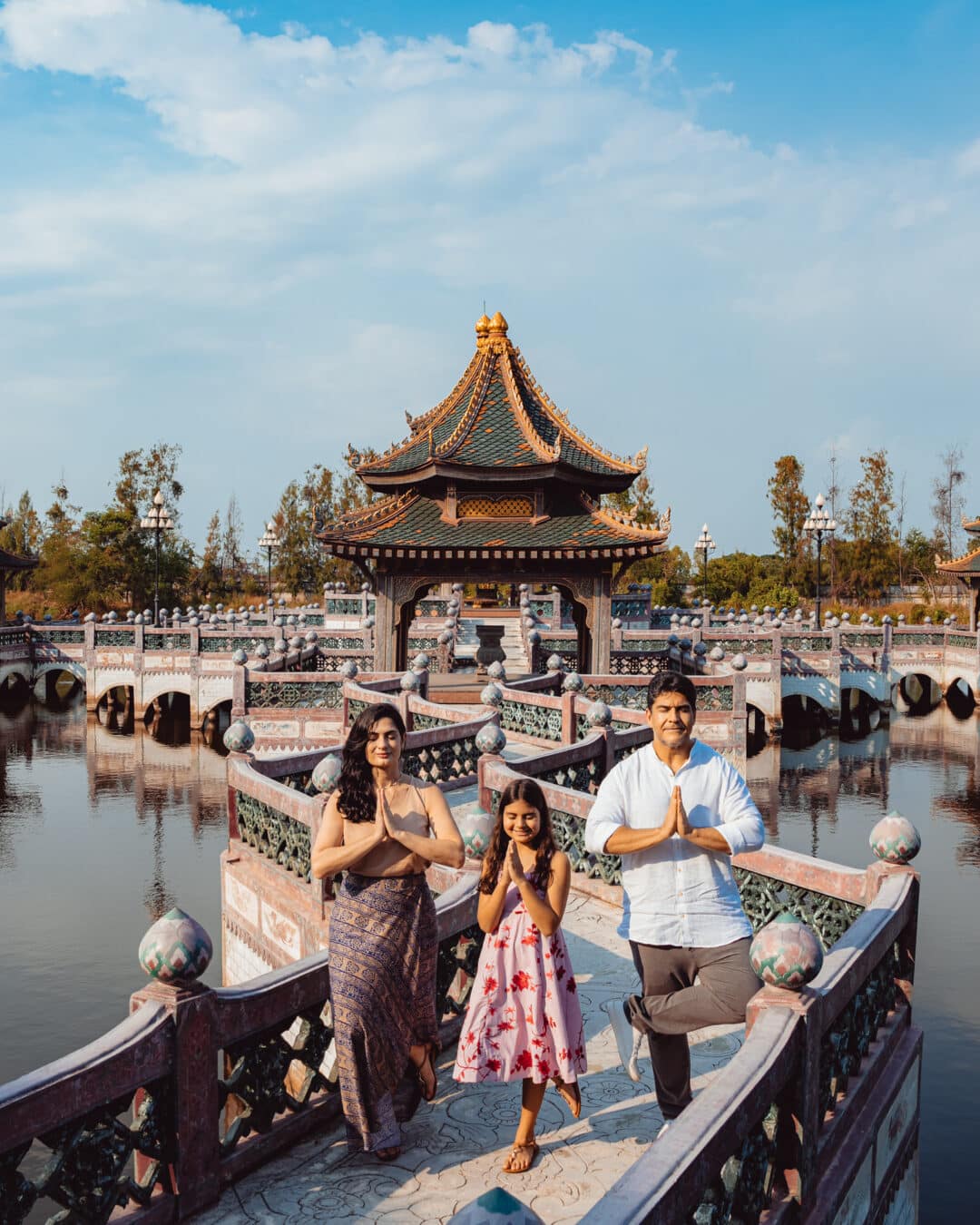
Four walkways extend from shore to the central pavilion floating on a lake. This symmetrical design works excellently for centered compositions. The reflection doubles the visual impact during still conditions.
Visit in late afternoon when the sun hits the structure from the side, adding depth and shadow. The surrounding water provides foreground interest. This location is particularly popular for couples photos with its romantic lakeside setting.
Sanphet Prasat Palace
The grand scale and ornate details of this Ayutthaya palace make it a photography highlight. The multiple spires create dynamic silhouettes against the sky. Gardens surrounding the palace add color and framing options.
Guides stationed here share historical context that can inform your compositions. The interior allows photography in most areas, though some restrictions apply.
Dusit Maha Prasat Throne Hall
This Rattanakosin-era structure features distinctive Thai roof architecture. The tiered design and golden accents photograph well from multiple distances. Close-ups reveal decorative details while wider shots capture the building’s impressive proportions.
Phanom Rung Sanctuary
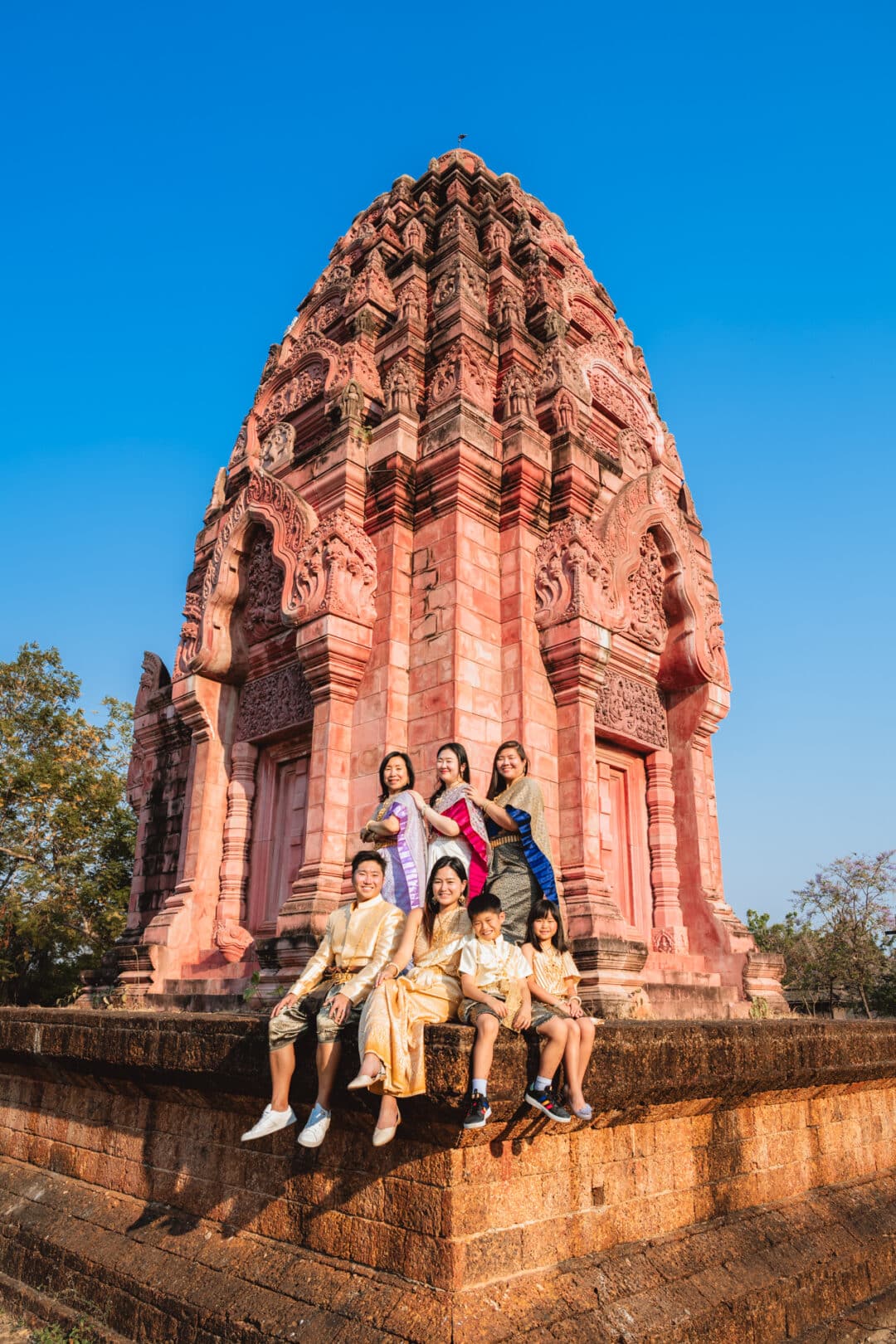
The Khmer-style stone sanctuary offers texture-rich photography opportunities. Weathered stone surfaces and intricate carvings respond well to directional light. The elevated position provides views over surrounding areas.
Floating Market Area
Traditional wooden houses and boats create authentic Thai scenes. Vendors add human interest to architectural shots. The relaxed atmosphere makes this area comfortable for candid photography.
Northern Thai Villages
Teak wood structures demonstrate Lanna architectural style. The warm wood tones and elevated construction create appealing compositions. These quieter areas often provide solitude for careful photography.
Royal Barge Procession
The fleet of ceremonial boats displayed along a canal offers unique subject matter. The ornate decorations and grand scale make impressive images. Reflections in the water add another dimension.
Photography Tips
- Golden hour (late afternoon before sunset) provides the most flattering light across the park
- Cloudy days offer even lighting that works well for architectural details
- Bring a polarizing filter to manage reflections on water features
- Wide-angle lenses capture full structures while telephoto lenses isolate details
- Most areas allow tripod use, valuable for longer exposures or HDR brackets
- See our travel photography portfolio for inspiration on capturing Thai architecture
Lukfoto offers professional photography sessions here starting at 19,000 baht. We know all the best spots and efficient routes to maximize your time.
Top Attractions
Beyond the photography highlights, several structures deserve attention for their historical and cultural significance.
Grand Palace of Ayutthaya
This reconstruction shows what the palace looked like before destruction in 1767. Only ruins remain at the original site, making this replica invaluable for understanding Ayutthaya’s former glory.
Prasat Hin Phimai
The Khmer sanctuary from Nakhon Ratchasima demonstrates the architectural connection between Thailand and Angkor. The detailed stone carvings represent some of the finest Khmer artistry.
Wat Phumin
The Northern Thai temple features famous murals depicting daily life in historic Nan province. The cruciform design creates unique interior spaces.
Three Pagoda Pass
This replica marks the historic crossing point between Thailand and Myanmar. The site remembers both ancient trade routes and more recent history.
Traditional Villages
Reconstructed homes show how different regions of Thailand lived. Each village type uses authentic materials and construction methods. Demonstrations sometimes show traditional crafts.
Scripture Repository
Elevated wooden structures traditionally stored Buddhist texts above flood levels. These buildings showcase intricate woodworking techniques.
Gardens and Landscape
The museum maintains extensive gardens with native plants and water features. The landscape design creates transitions between different regional areas. Shaded paths provide relief from tropical heat.
Elephant Experience
The park features an elephant area where visitors can interact with these majestic animals. Feed the elephants for approximately 100 baht or take an elephant ride for around 1,000 baht. This adds a traditional Thai element to your visit.
Cultural Demonstrations
The park occasionally hosts traditional dance performances and craft demonstrations. Check the schedule at the entrance for current activities during your visit.

Best Cafes & Restaurants
The park provides several dining options scattered throughout the grounds. Plan your refreshment stops to coincide with rest breaks.
Floating Market Restaurants
The floating market area hosts the main dining facilities. Thai cuisine served here includes pad thai, curries, and noodle soups. Vendors on boats sell fresh fruit and snacks.
The setting recreates traditional Thai market atmosphere. Prices remain reasonable considering the tourist location. Shaded seating areas overlook the water.
Old Market Town
Near the entrance, traditional shophouses offer quick bites and desserts. This area works well for early arrival or departure snacks. Local favorites include mango sticky rice and Thai iced tea.
Scattered Cafes
Small refreshment stands appear near major attractions throughout the park. These sell drinks, ice cream, and light snacks. Useful for quick energy boosts between sections.
Nearby Dining Options
Black Market – Just 8 minutes by taxi, this night market offers excellent street food and snacks. Great option for dinner after your visit, especially if you stayed until closing time.
Sailom Bangpu – Nearby seafood restaurant featuring sea views and distinctive ceramic decor. The coastal location provides a relaxing atmosphere after exploring the park.
Dining Tips
Bring water bottles since walking distances are substantial. Most cafes offer refills at reasonable prices. Pack light snacks if you have dietary restrictions, though vegetarian options exist at main restaurants.
The floating market restaurants provide the most complete meal options. Allow 45-60 minutes for a proper lunch break. Afternoon visits might coordinate meals before or after the park to save time.

Professional Photoshoot Services
The dramatic temples and palace grounds create exceptional backdrops for professional photography. The variety of architectural styles means you can capture multiple looks in a single session–from Khmer stone temples to golden Thai palaces.
Why Book a Photographer Here
The park spans 320 hectares with structures scattered across the grounds. A photographer familiar with the location saves you hours of wandering, knows which spots photograph best at different times, and handles all the logistics while you focus on enjoying the experience.
Lukfoto has photographed here many times and knows the location inside out. We understand the most efficient routes between structures, can navigate quickly to maximize your session time, and know exactly where to position you for the best compositions at each spot.
Sessions start at 2 hours. The distance from Bangkok and the park’s size mean shorter bookings don’t provide enough time to capture the best locations without rushing through them.
Many visitors hire professional photographers here for marriage proposals, anniversary shoots, or simply to have quality photos without worrying about equipment. The architectural variety means you’ll leave with images that look like you spent days touring Thailand.
Lukfoto Photography Packages
Sanook Photoshoot – 19,000 baht
- 250–500 professionally edited images
- 2 hours session (minimum required for this location)
- Ideal for couples, families, or solo travelers wanting quality photos at key highlights
Extended Session – 27,000 baht
- 380–800 professionally edited images
- 3 hours session
- Covers more locations with time for outfit changes
- Option to include nearby Erawan Museum for additional architectural variety
Sawadee Deluxe – 34,000 baht
- 500–1,000 professionally edited images
- 4 hours session
- Comprehensive coverage of the museum plus Erawan Museum
- Multiple outfit changes and relaxed pacing for creative shots
All packages include complete professional editing with delivery within one week. High-resolution files suitable for printing and social media use.

Thai Traditional Costumes
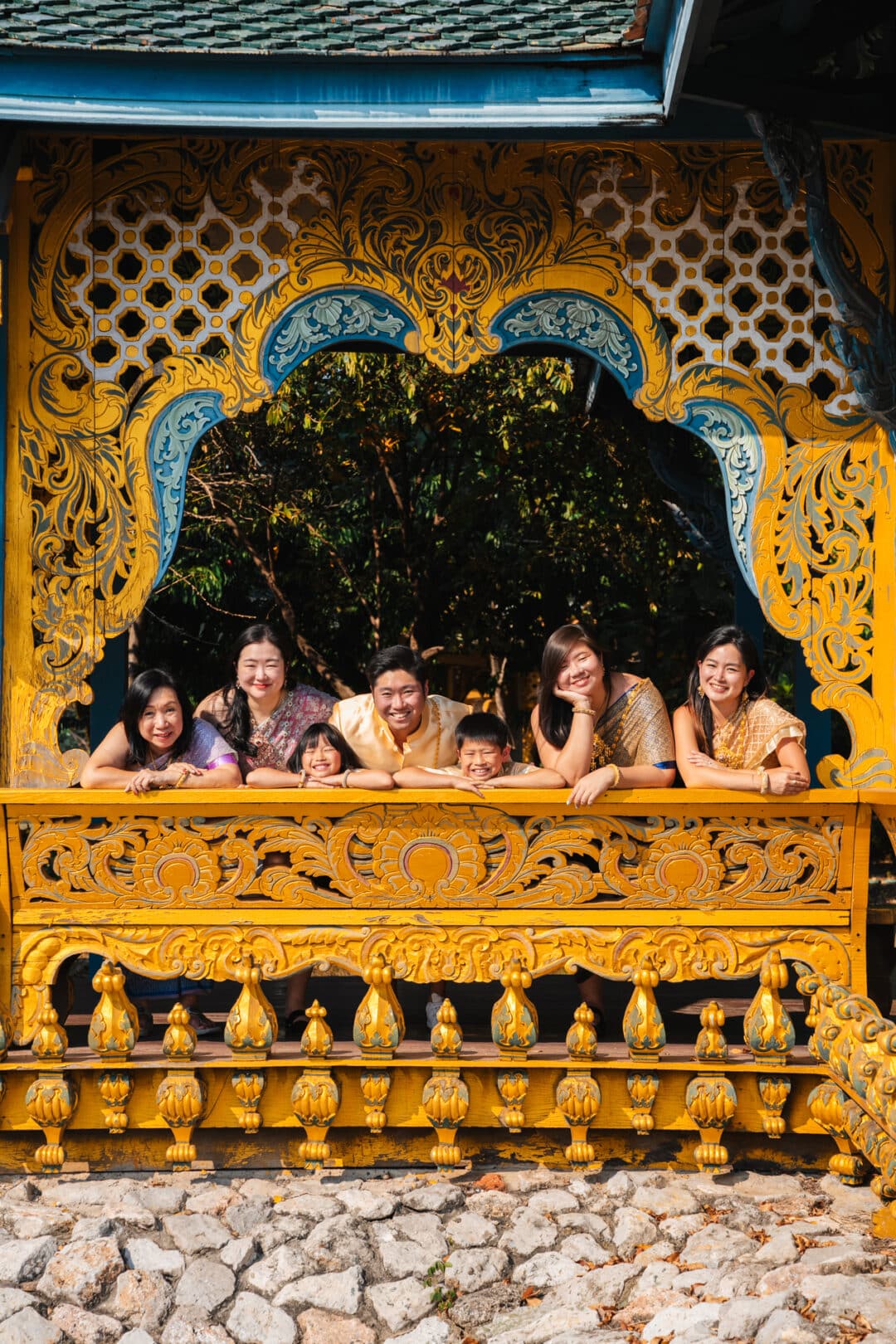
Both locations offer traditional Thai costume rentals (400-1,000 baht per person). Professional makeup and hair styling available for approximately 600 baht. Many clients split their session between traditional costumes and their own outfits for variety.
Multiple bathroom facilities allow outfit changes throughout your session. You can start in casual clothes, change into traditional Thai costumes, then switch back–whatever creates the story you want to tell.
Video Add-On Services
Videography services can complement your photography session–ask about packages when booking. Video works particularly well for capturing movement through temple grounds or creating social media content in traditional Thai costumes.
Booking Your Session
Reserve at least one week ahead to secure your preferred date and time slot. Sessions start at 1:00 PM at the earliest to maximize afternoon and golden hour lighting. We recommend finishing right after sunset–Bangkok traffic becomes heavy after 6:00 PM, and taxi rates increase during peak hours.
Weekdays offer fewer crowds than weekends, creating better conditions for photography without tourists in the background.
Contact Lukfoto: Discuss your vision, ask questions about specific locations, and receive personalized recommendations for your shoot. We’ll coordinate timing, suggest outfit combinations, and handle all necessary arrangements.

How to Get There
The museum sits approximately 30 kilometers southeast of central Bangkok in Samut Prakan province. Several transportation options connect the city to the park.
By BTS and Songthaew
Take the BTS Sukhumvit Line (light green) to Kheha Station, the final stop. Exit at Gate 1 or 3. Cross the footbridge to find songthaew number 36 waiting at the station.
Tell the driver “Muang Boran” or show them this location on a map. The ride takes 10-15 minutes and costs 8-10 baht per person. Press the button when you want to stop. Pay when exiting.
This route offers the most economical option for independent travelers. Total cost runs under 100 baht per person round trip from central Bangkok.
By Grab or Taxi
Book through the Grab app for transparent pricing, typically 350-450 baht from central Bangkok. The journey takes 45-60 minutes depending on traffic conditions.
Traditional taxis charge similar rates but negotiate the fare before departing. Return transportation options include the same methods or prearranged pickup.
By Private Car
Follow Sukhumvit Road southeast. The park provides paid parking with rates varying by time of day. GPS coordinates: 13.5327° N, 100.6229° E.
By Tour
Several Bangkok tour operators offer packages combining this museum with nearby attractions like Erawan Museum. These include transportation, admission, and sometimes lunch.

Best Times to Visit
The park opens daily from 9:00 AM to 7:00 PM. Different times offer distinct advantages depending on your priorities.
Afternoon Visits (1:00 PM onwards)
Late afternoon provides optimal photography lighting as the sun moves lower. Temperatures cool compared to midday heat. The golden hour before sunset creates the most dramatic lighting conditions.
Professional photoshoots start at 1:00 PM at the earliest. We recommend finishing sessions right after sunset–Bangkok traffic intensifies after 6:00 PM, and taxi prices increase during peak hours.
Morning Visits (9:00 AM – 12:00 PM)
Early arrival means fewer crowds and cooler temperatures. You’ll need most of the day to see everything thoroughly. Morning light works well for the eastern structures.
Seasonal Considerations
November through February offers the coolest weather in Thailand, with temperatures ranging 25-30°C. December and January provide the most comfortable conditions for extended outdoor exploration.
March through May brings intense heat that can make outdoor exploration challenging, with temperatures often exceeding 35°C. April ranks as the hottest month. Visit early or late in the day during this period.
June through October sees occasional rain, though afternoon showers often pass quickly. September typically receives the most rainfall. The rainy season creates lush greenery and fewer tourists, making it worthwhile despite weather unpredictability.
Avoiding Crowds
Weekdays attract fewer visitors than weekends. Thai holidays can bring large domestic tourist groups. The park’s size means you can usually find quiet spots even during busy periods.
Practical Tips
Getting Around
Bicycles: Free with admission (standard pedal bikes). Electric bicycles available for rental at additional cost. The best option for seeing everything at your own pace. Paths are mostly flat and well-maintained.
Golf Carts: Rent for 350 baht first hour, then 200 baht per additional hour (4-seat) or 500/300 baht (6-seat). Requires a driver’s license. Convenient but limits spontaneous stops.
Private Vehicle with Driver: You can hire a Grab driver or book a private van before leaving your hotel and bring them into the park. Purchase an admission ticket for your driver. This option works well for families with elderly members, those wanting air conditioning between stops, or visitors who need quick access to facilities for makeup touch-ups and outfit changes.
Tram Tours: Included with admission, departing at 10 AM, 1 PM, 3 PM, and 5 PM. Tours last 90 minutes with limited stops. Good overview but insufficient for thorough exploration.
What to Bring
- Comfortable walking shoes with good support for extended exploration
- Sun protection including hat, sunglasses, and sunscreen
- Refillable water bottle to stay hydrated in tropical climate
- Light, modest clothing suitable for temple visits
- Camera equipment if you enjoy photography
- Small backpack for carrying belongings while cycling
Temple Etiquette & Dress Code
Remove shoes before entering temple buildings. Dress modestly covering shoulders and knees. Speak quietly in sacred spaces. Photography is allowed in most areas but watch for restriction signs.
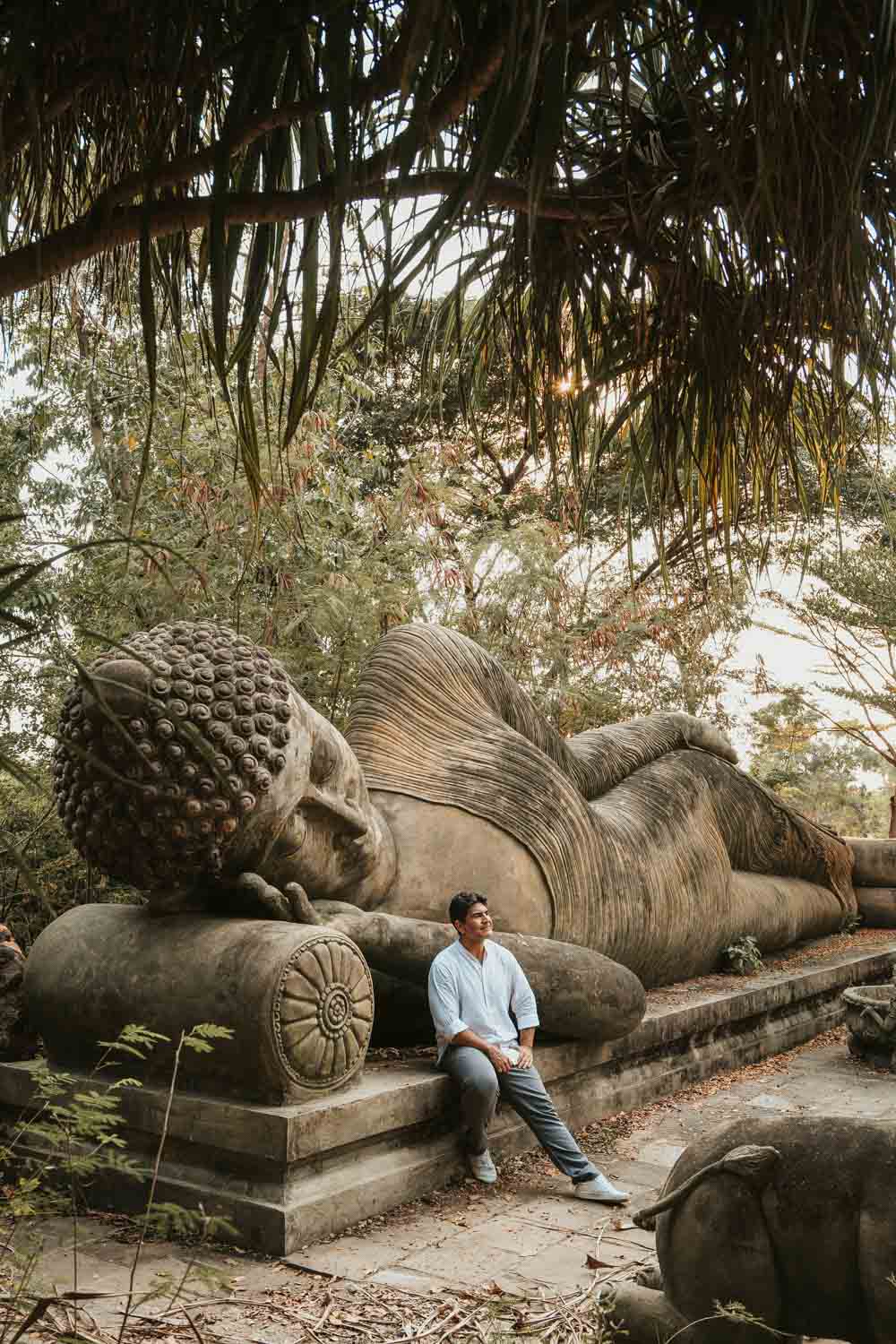
The dress code here is respectful but not strictly enforced. Women should cover shoulders, belly, and knees. Men should avoid tank tops and wear shirts with sleeves. While no one actively checks, modest attire shows respect for the site. These aren’t just decorative replicas—real monks live and practice here, making appropriate dress the polite choice.
Time Allocation
Plan minimum 3-4 hours to see major highlights. A full day allows thorough exploration of all regions. The park map at entrance shows estimated walking times between sections.

Frequently Asked Questions
How much does admission cost?
Tickets at the counter: 700 baht adults, 350 baht children (6-14 years old)
Save money by booking online: Buy tickets through Klook for 380 baht adults and 310 baht children – nearly half the gate price.
Parking: 400 baht per vehicle (9:00 AM – 4:00 PM), 200 baht (4:00 PM – 7:00 PM)
How long should I spend at Ancient City?
Budget minimum 3-4 hours for major highlights. Full exploration takes 5-7 hours. Photography enthusiasts often spend entire days capturing different locations and lighting conditions.
Can I bring my own food?
Outside food and drinks are generally permitted. Several shaded areas and pavilions work for picnics. Dispose of trash properly to help maintain the grounds.
Is Ancient City suitable for children?
Yes, families enjoy the open spaces and varied structures. Bicycles keep children engaged. The scale makes it feel like an adventure. Bathrooms and rest areas appear throughout the grounds.
Are wheelchairs or strollers practical here?
Paved paths accommodate wheels, though some structures require stairs. The extensive distances may challenge manual wheelchairs. Golf carts offer accessible alternatives for mobility-limited visitors.
Can I visit Ancient City and Erawan Museum in one day?
Yes, they’re located just 6 kilometers apart. Erawan Museum takes 1-2 hours while the main park requires 3-7 hours. Start with Erawan in the morning, then spend the afternoon exploring the larger site.
Do I need a guide?
Not required. English signage explains most structures. Audio guides available at entrance (passport deposit required). Hiring a guide provides deeper historical context if desired.
What’s the difference between Ancient City and the Grand Palace?
The Grand Palace in Bangkok is a historic royal complex still used for ceremonies. This outdoor museum contains replicas of structures from across Thailand, including a recreation of Ayutthaya’s destroyed palace.

Related Bangkok Locations
After experiencing this outdoor museum, consider these nearby cultural attractions that complement your historical exploration. For more ideas, explore our complete guide to places to go in Bangkok.
Erawan Museum sits just 6 kilometers away. The massive three-headed elephant structure houses cultural artifacts and features ornate interior design.
Bang Pu Recreation Center provides seaside atmosphere 15 kilometers away. Migratory seagulls arrive November through March. Mangrove forests and seafood restaurants line the coast.
Ready to Capture Your Visit?
This location offers opportunities for remarkable photography against authentic Thai architectural backgrounds. Lukfoto’s photography services help you make the most of your visit with professional guidance, efficient routing, and quality editing.
Our packages start at 19,000 baht for a 2-hour session, with options extending to 4 hours for comprehensive coverage including nearby Erawan Museum. Traditional Thai costume rentals and makeup services available on-site.
Book your photoshoot with Lukfoto. Limited afternoon golden hour slots available. Contact us to discuss your vision and secure your preferred date.
Explore Thailand’s cultural heritage while creating images that last. We’ll show you this remarkable place through a photographer’s perspective.