
- Ticket price
- 200 THB for foreign visitorsFree for Thai nationals with ID. Small children enter free.
- How to pay
- Cash at the gateThere is no official online ticket for Wat Arun. Anything sold online is a resold tour package. Bring small notes and walk up. Queues are rarely longer than a few minutes.
- Opening hours
- 8:00 AM to 6:00 PM, dailyLast entry is around 5:30 PM. The prang closes to climbers slightly earlier than the grounds.
- Getting there
- Ferry from Tha Tien PierCheap, but the boat you pick matters, and the flag colors changed in 2026. The five-step route
- Best time
- Two windows, and only twoEverything between them is hotter, busier, and far less pleasant. Which hours to aim for
Prices and hours checked on the ground in September 2026 and confirmed again (checked October 2026).
Wat Arun is on every Bangkok itinerary, and rightly so. But a good visit comes down to a handful of small details most guides skip: which ferry, which hour, what to wear, and how much cash to carry. Here is everything worth knowing before you go.
Wat Arun entrance fee: price, how to pay, what it covers
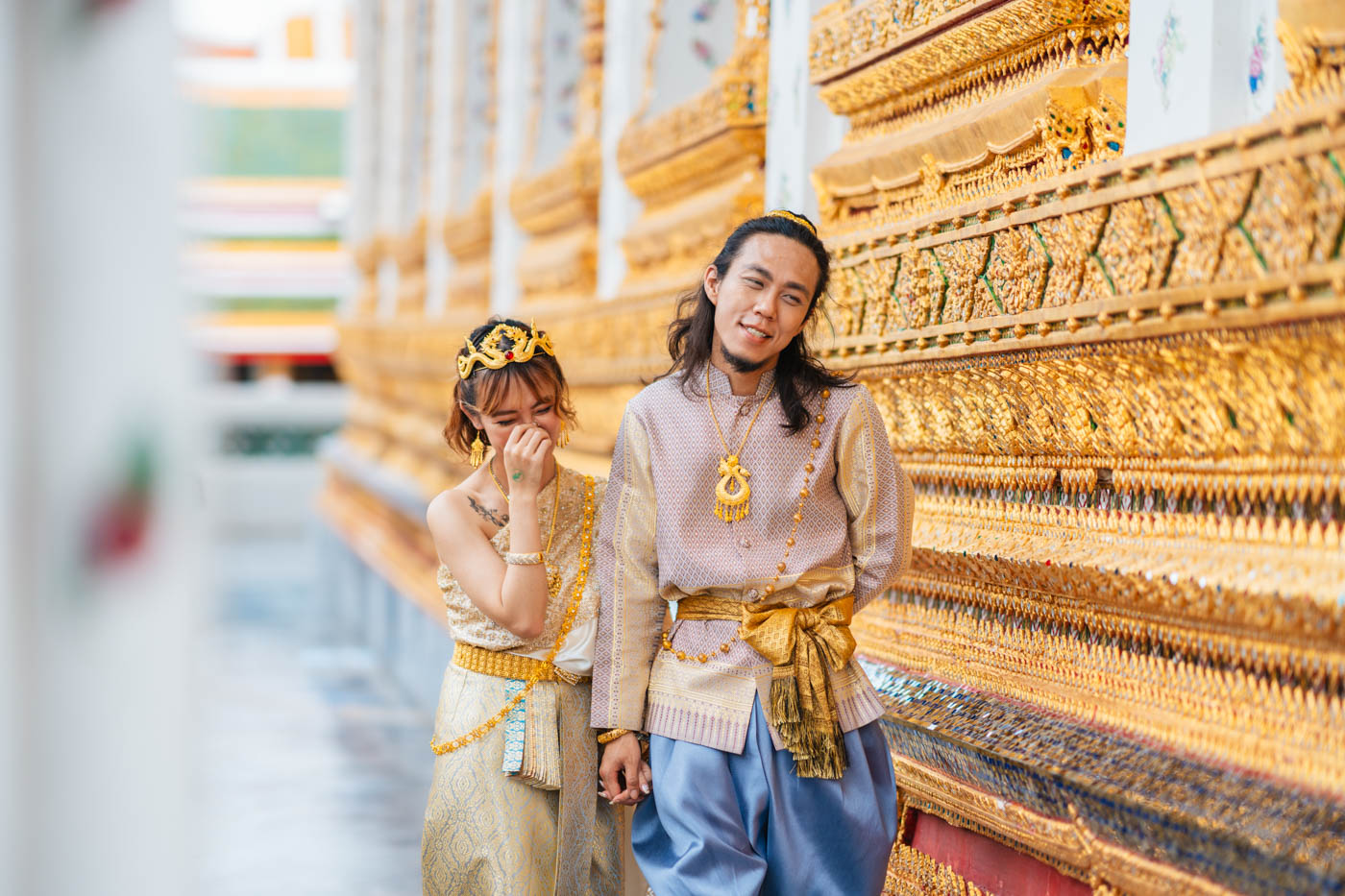
The Wat Arun entrance fee is 200 THB per foreign visitor (checked October 2026). Thai nationals enter free on production of a Thai ID card, and small children are admitted free. There is no student rate and no combined ticket with Wat Pho or the Grand Palace, whatever a tuk-tuk driver tells you.
You cannot buy a Wat Arun ticket online. The temple has no official booking site and no timed-entry system. If you find Wat Arun tickets for sale on a booking platform, you are buying a tour or a guide package with the 200 THB rolled into a much larger price. Just turn up with cash.
A few practical notes on the ticket itself:
- Cash only, and bring small notes. The booth is not reliable for card payments and staff often cannot break a 1,000 THB note early in the morning.
- Your ticket covers the whole complex, including the central prang, the four satellite prangs, the ordination hall and the riverside terrace.
- Keep the ticket stub. Staff sometimes check it again at the base of the prang.
- Sarong rental is separate, usually about 20 THB with a 100 THB refundable deposit, if you turn up underdressed (checked October 2026).
- The boat is not included. Express boat fares changed twice in 2026 and are currently around 17 to 18 THB, with the cross-river ferry somewhere between 5 and 7 THB depending on which update your source predates. Budget 25 THB each way and you will not be caught short.
All in, a solo visitor arriving from Sathorn Pier and heading back the same way should expect to spend about 250 THB for the whole trip.
A quick backstory worth knowing
Wat Arun Ratchawararam is better known as the Temple of Dawn, a name connected to Aruna, the Hindu deity of the dawn.
The site has roots in the Ayutthaya period but became nationally significant in 1767, when, according to tradition, King Taksin arrived here at sunrise after escaping the Burmese sacking of Ayutthaya. He elevated it to a royal temple, and it briefly housed the Emerald Buddha before that image was moved across the river to Wat Phra Kaew. Today the temple appears on the Thai 10 baht coin, a decent hint at how culturally significant it is.
The architecture and why it looks the way it does
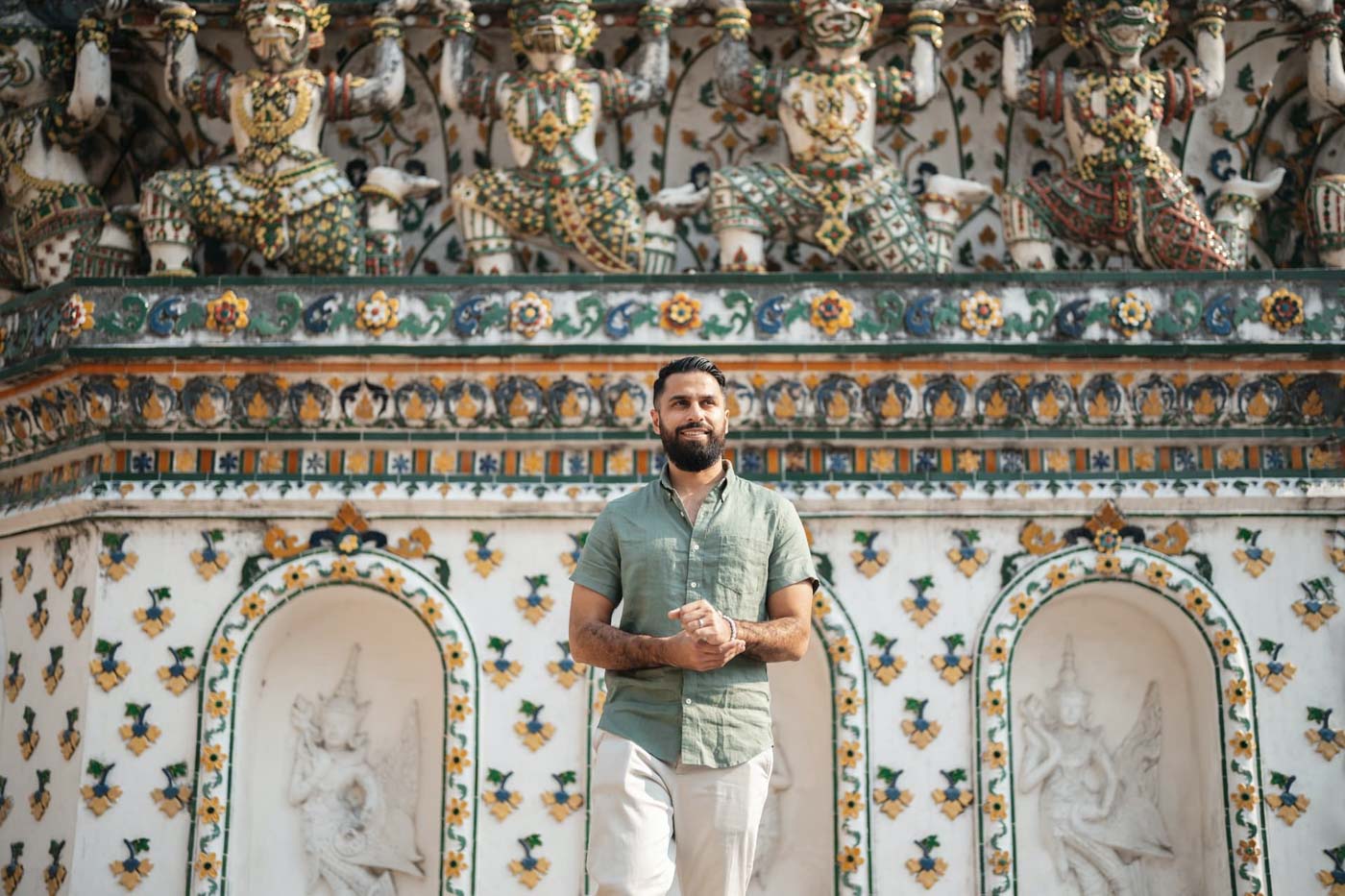
The central prang rises roughly 70 to 82 meters depending on which measurement you trust, and the whole structure is encrusted with millions of fragments of broken Chinese porcelain and seashells. Much of it arrived as ballast in trading ships, which is why the patterns are a patchwork of unmatched blue-and-white plates.
The design blends Khmer and Thai styles to represent Mount Meru, the sacred mountain at the center of the Buddhist universe, with four smaller prangs facing the cardinal directions. You can climb partway up the central prang. The steps are steep, but the view across the Chao Phraya toward the Grand Palace and Wat Pho is worth every careful step.
How to get to Wat Arun
The cheapest and most scenic route is the BTS plus ferry combination. It takes about 35 minutes from central Bangkok and costs under 60 THB.
- Take the BTS Skytrain to Saphan Taksin Station.
- From Exit 2, walk down to Sathorn Pier, also signed as Central Pier. It is a two-minute walk.
- Board the commuter express boat heading upriver, currently around 17 to 18 THB flat. Check the flag color before you board: the orange flag now runs weekdays only, and the daytime yellow flag replaces it between roughly 08:10 and 15:40 on weekdays and all day at weekends. Both stop at Tha Tien. What you want to avoid is the blue-flag tourist boat, which costs several times more and is no faster.
- Get off at Tha Tien Pier (N8), about 20 minutes upriver.
- Walk through the small market lane to the cross-river ferry and cross to the temple bank. The fare is a handful of baht, cash only, bought at the desk before the dock, and the ferry runs from around 5:00 AM to 7:00 PM.
The flag system changed twice in 2026, and fares with it. Most guides online still describe the old all-week orange service. If you are traveling on a weekend, do not stand at Sathorn waiting for an orange flag. Look at the boat, not at the blog.
The cross-river ferry takes about three minutes and gives you the best free view of the temple you will get all day, so have your camera out on the approach rather than buried in a bag.
Taxis and tuk-tuks are the alternative. They are fine if mobility is a concern, but they are slow in Bangkok traffic, and you miss the river approach, which is half the charm. If you do take a taxi, ask for the meter and name the destination as Wat Arun, Arun Amarin Road, since the Thonburi side of the river confuses some drivers.
Planning your first trip to the Chao Phraya temples? We shoot here most weeks and can tell you exactly which hour will be quiet on your date.
When to visit (it actually matters)
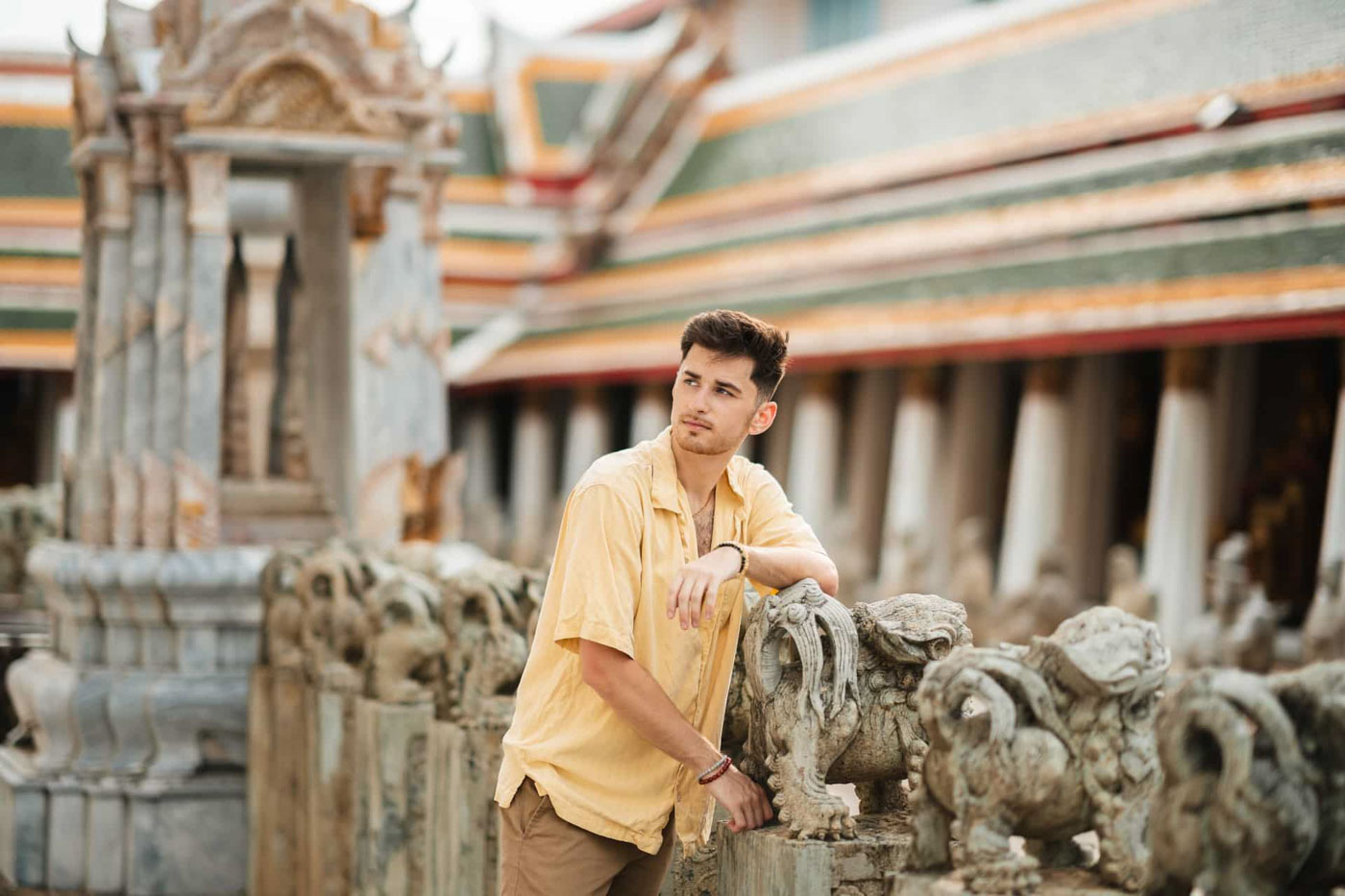
Timing makes a bigger difference at Wat Arun than at most Bangkok temples, for two reasons. Shade is limited, and tour groups fill the complex all day from around 9 AM onward.
- 8:00 to 9:00 AM. Coolest temperatures, softest light, fewest crowds. This is the only genuinely quiet window of the day.
- 9:30 AM to 2:30 PM. The busiest stretch. Tour buses arrive steadily, and from 10 AM to 2 PM the overhead sun is harsh and unflattering for photos.
- 3:30 to 5:30 PM. The second-best window. Golden-hour light on the spires, tour groups thinning out, and you can stay for the sunset view from the opposite bank afterwards.
- High season, November to April. Bangkok's peak tourist months. The temple is busy throughout, and early morning or late afternoon are the only realistic options.
- Rainy season, June to October. Fewer crowds and dramatic skies, but afternoon downpours are common and the prang steps get slippery. Mornings are the safer bet.
How long to spend at Wat Arun
Most visitors are done in 60 to 90 minutes. That is enough to walk the full circuit of the central prang, climb the lower terrace, look at the ordination hall and spend a while on the river terrace.
Stretch it to two hours if you want to sit somewhere shaded, or if you are photographing seriously and waiting for the light to move around the spires. Under 45 minutes and you are effectively just taking a photo and leaving, which is a shame given the ferry ride it took to get here.
If you are combining Wat Arun with Wat Pho and the Grand Palace in one day, budget half a day in total and start early. All three in an afternoon does not work, because the Grand Palace stops selling tickets at 3:30 PM.
Wat Arun dress code essentials
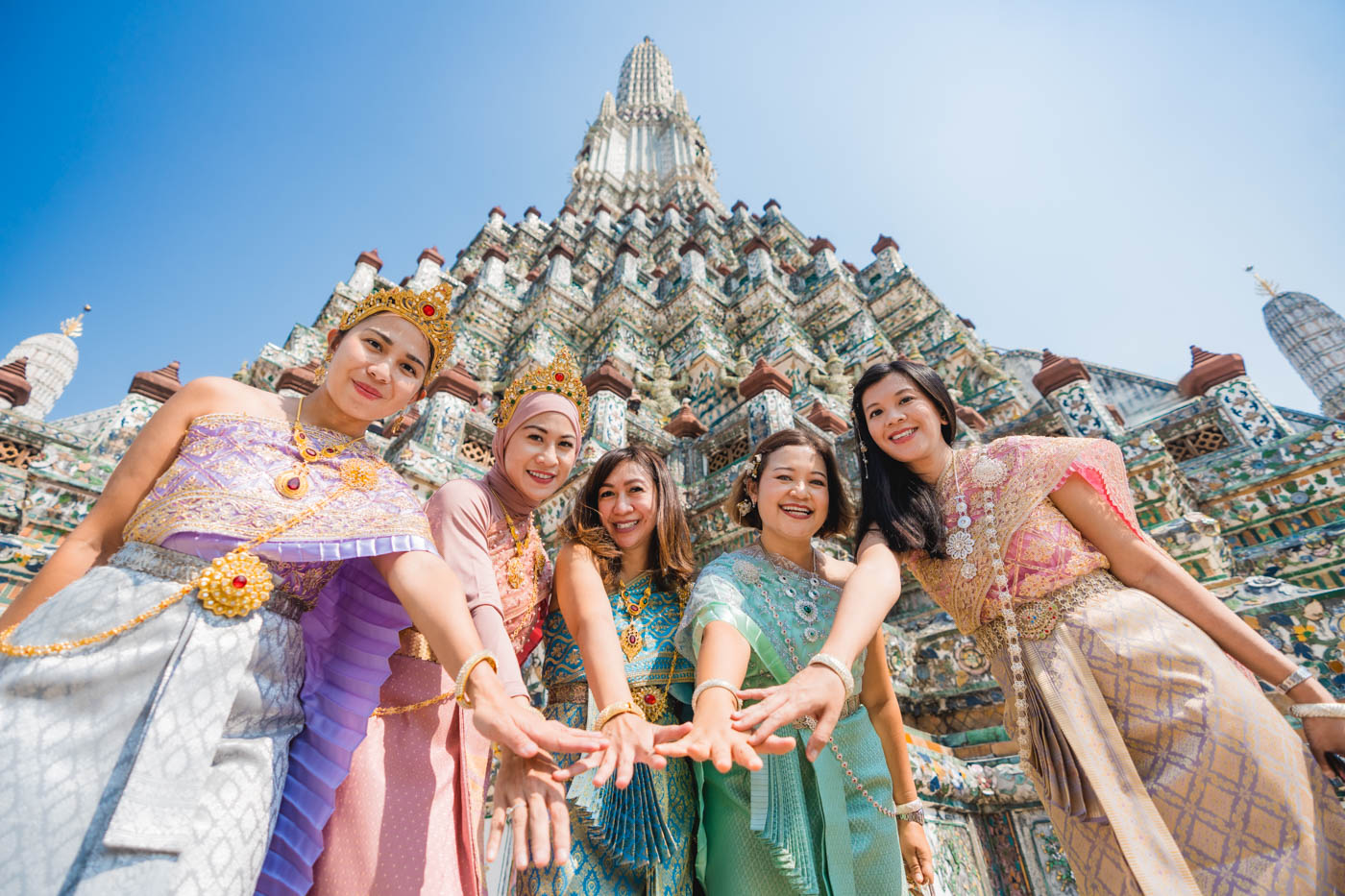
Wat Arun enforces its dress code strictly, more so than Wat Pho. Shoulders and knees must be covered for both men and women. Sarong rentals are available at the entrance if you turn up underdressed, but the queue for them can be long at midday and the stock of larger sizes runs out.
For the full breakdown by gender and age, plus what to do if you want to skip the whole problem by wearing a traditional Thai costume, see our Wat Arun dress code guide.
Temple etiquette beyond the dress code
A handful of things that visitors often do not realize until they are gently corrected:
- Remove shoes before entering any building or stepping onto raised platforms. Look for the shoe racks.
- Do not point your feet toward Buddha images. If you sit, tuck them to the side or behind you.
- Keep your voice down. Worshippers do actually come here to pray.
- Do not touch sacred objects, monks' robes or Buddha statues.
- Women should not make direct physical contact with monks. If you need to hand something to a monk, set it down for him to pick up, or hand it to a male companion.
- Ask before photographing monks or people praying.
Combining Wat Arun with nearby sights
Because getting here involves a river crossing, most people fold the visit into a temple circuit. The logical pairings:
- Wat Pho, the Reclining Buddha, is directly across the ferry, five minutes away. It is quieter than Wat Arun and pairs well on the same morning. Entrance is 300 THB (checked October 2026).
- The Grand Palace and Wat Phra Kaew are a ten-minute walk from Tha Tien Pier. If you are doing all three, start at the Grand Palace, where ticket sales and last admission end at 3:30 PM even though the grounds stay open until 4:30 PM (checked October 2026), then Wat Pho, then ferry across to Wat Arun last for the late light.
Quieter temples most tourists skip
The Grand Palace is the most crowded of the three big stops, and in high season the whole circuit can feel like a queue. If that is wearing you down, these are the places we send people instead. All are within a short ride of the old town and none of them will be full of tour groups.
Practical tips worth knowing
We spend a lot of time on this stretch of the Chao Phraya, and a few things are not obvious on a first visit:
- The best photo of Wat Arun is not from inside the temple. It is from the east bank, looking back across the river, especially at sunset when the spires silhouette against a pink and orange sky. Several riverside cafes on the Tha Tien side have upper terraces built specifically for this view.
- Bring small bills for the ferry and entrance fee. Ferry staff almost never break large notes.
- Do not climb the central prang in flip-flops. The steps are steep, old and slippery after any rain.
- Go up the prang first, then walk the grounds. The stairs get congested as the morning goes on and there is only one way down.
- Give yourself time afterwards. The small streets around Tha Tien Pier have some of Bangkok's best old-town atmosphere: cheap boat-noodle stalls, temple markets and photogenic shophouses.
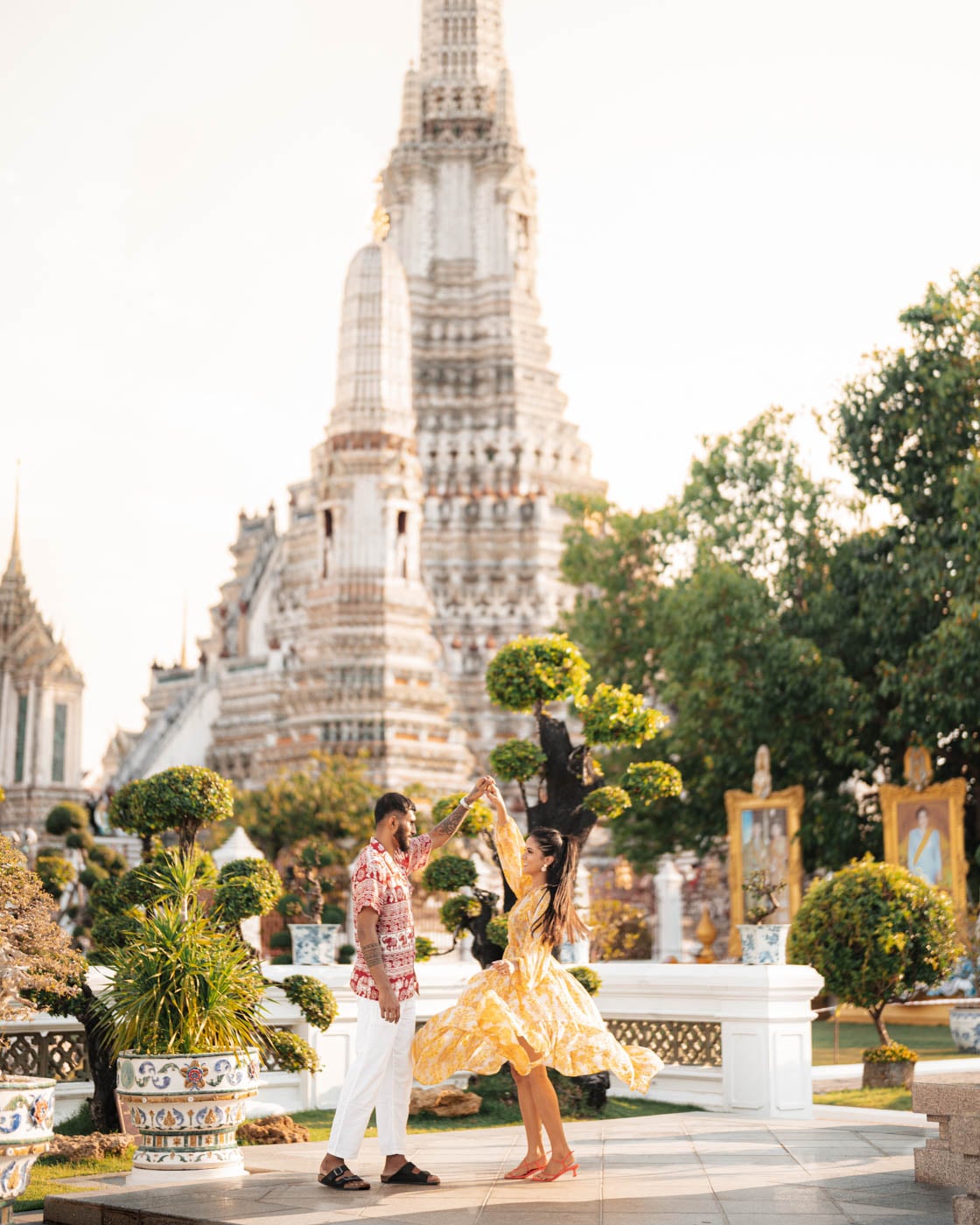
Our team has planned many sessions around this stretch of the river, and we always time them for the early or late light.
Common questions
Do I need to book Wat Arun tickets in advance?
No. You buy tickets at the gate for 200 THB, cash only (checked October 2026). Queues are usually just a few minutes.
Who can enter Wat Arun for free?
Thai nationals with ID and small children enter free. The view from the river and the east bank costs nothing.
Can you climb the central prang?
Yes, up to the second terrace. The steps are very steep and there is a handrail on one side only. Wear shoes with grip, avoid it in the rain, and arrive by 5:00 PM if climbing matters to you.
Where is the best place to photograph Wat Arun?
From the east bank near Tha Tien Pier, looking back across the river at sunset. The ferry crossing also gives a good close view.
Can I visit Wat Arun, Wat Pho and the Grand Palace in one day?
Yes, in one long morning. Start at the Grand Palace, which stops selling tickets at 3:30 PM (checked October 2026), then Wat Pho, then cross to Wat Arun.
Final thought
Wat Arun rewards visitors who plan the small things: timing, outfit, ferry route, shoes, and enough cash in the right denominations. The temple itself is extraordinary, and you do not want anything getting in the way of enjoying it. Go early, cover up, leave the flip-flops at the hotel, and give yourself enough time to walk around all four sides of the central prang. That is really all it takes.
Want professional photos from the visit?
Our one-hour Wat Arun photoshoot delivers up to 300 edited photos within 72 hours, with honest advice on crowds, timing, and quieter temple alternatives if Wat Arun's tour-bus traffic is not for you.